
 By Admin
Sustainable Hospitality in the GCC: Best Practices, Challenges, and Future of Green Tourism
Sustainable Hospitality in the GCC is no longer a buzzword but a defining force shaping the future of tourism across the Gulf region. Comprising the United Arab Emirates (UAE), Saudi Arabia, Qatar, Bahrain, Kuwait, and Oman, the GCC has become one of the fastest-growing hospitality hubs in the world. With multi-billion-dollar investments in luxury resorts, smart cities, and mega-events, the region is attracting global attention.
Yet, as international travelers increasingly seek eco-friendly stays and responsible tourism experiences, GCC hotels and resorts face a critical challenge: balancing luxury with sustainability. From energy efficiency to water conservation and waste reduction, hospitality businesses must align with global environmental standards and national visions like Saudi Arabia’s Vision 2030 and the UAE’s Energy Strategy 2050.
This blog post explores how Sustainable Hospitality in the GCC is evolving, examining best practices, government initiatives, real-world case studies, and future trends that will define the next era of green tourism in the Gulf.
Here is an AI-made podcast from this blog post, in case you would prefer to listen to a podcast rather than scroll down and read the post.
If you don’t have time to read through the post, you can watch this short video recap of it.
The GCC Hospitality Industry: Growth, Appeal, and Environmental Pressures
Rapid Growth and Global Appeal
The hospitality market in the GCC was valued at over USD 25 billion in 2022 and is projected to surpass USD 37 billion by 2028. Several factors are fueling this growth:
- Mega-events: Expo 2020 Dubai, FIFA World Cup Qatar 2022, COP28 in the UAE, and other large-scale international gatherings attract millions of visitors.
- National strategies: Saudi Arabia’s Vision 2030 and the UAE’s Tourism Strategy 2031 place tourism and hospitality at the center of economic diversification plans.
- Luxury branding: The GCC is home to iconic luxury resorts, Michelin-starred restaurants, and unique cultural experiences that attract high-spending travelers.
Strategic Advantages of the GCC
- Location: The GCC’s geographic position connects Europe, Asia, and Africa, making it an accessible hub.
- Infrastructure: Ultra-modern airports, advanced transport systems, and smart cities enhance guest experiences.
- Safety: Political stability and high security make the region attractive to leisure and business travelers alike.
Yet, growth comes with challenges. Air conditioning accounts for 70% of peak electricity demand in the GCC, while desalination consumes massive amounts of energy and contributes to brine waste in oceans. Without sustainability measures, these pressures could threaten long-term tourism growth.
Why Sustainability Matters in GCC Hospitality
Meeting Global and Regional Climate Goals
All GCC nations are signatories to the Paris Agreement and have adopted the UN Sustainable Development Goals (SDGs). Hospitality, as a resource-intensive sector, plays a vital role in meeting net-zero and decarbonization targets.
Business Benefits of Sustainability
- Operational savings: Energy-efficient systems, water conservation, and waste reduction lower costs.
- Market competitiveness: Eco-certifications and sustainability initiatives enhance brand reputation.
- Policy alignment: GCC governments are introducing sustainability benchmarks; compliance avoids penalties and ensures eligibility for incentives.
Responding to Traveler Preferences
Studies show that 70% of global travelers prefer eco-friendly accommodations. In the GCC, where luxury is the norm, sustainability is becoming an added dimension of luxury — not an alternative to it. Hotels that fail to adapt risk losing eco-conscious travelers to competitors.
Key Sustainable Practices in GCC Hospitality
Hotels and resorts across the GCC are integrating sustainability into daily operations and long-term planning. The most impactful practices include:
1. Energy Efficiency and Renewable Energy
- Solar power adoption: Rooftop solar panels reduce grid dependency. For instance, several Dubai hotels are integrating solar for water heating and electricity.
- Smart building management: IoT systems regulate air conditioning and lighting, cutting unnecessary energy use.
- Efficient lighting: LED systems and motion sensors reduce energy consumption significantly.
2. Water Conservation
- Greywater recycling: Recycled wastewater irrigates landscapes and flushes toilets.
- Low-flow plumbing fixtures: Reduce water usage without compromising guest comfort.
- Native landscaping: Hotels increasingly use drought-resistant plants instead of water-intensive grass lawns.
3. Waste Reduction and Circular Economy
- Food waste composting: Organic waste is converted into fertilizer for landscaping.
- Plastic-free initiatives: Many hotels now ban single-use plastics, opting for biodegradable or reusable alternatives.
- Comprehensive recycling programs: Partnerships with municipal waste companies help divert waste from landfills.
4. Sustainable Sourcing
- Local procurement: Hotels source produce, seafood, and construction materials locally, lowering carbon emissions.
- Ethical supply chains: Partnering with suppliers who follow fair labor and environmental standards.
- Farm-to-table dining: Resorts in Oman and UAE increasingly serve locally grown, organic produce.
5. Guest Engagement through Green Programs
- Towel and linen reuse programs: Guests can choose reduced laundry services.
- Tree-planting initiatives: Some hotels plant trees for every skipped room cleaning.
- Eco-awareness campaigns: In-room information educates travelers on conservation practices.
Case Studies of Sustainable Hospitality in the GCC
1. Hotel Indigo Dubai Downtown (UAE)
- Practices: Locally sourced materials, energy-efficient lighting, water-saving fixtures.
- Impact: Lower operational costs, strong branding as a sustainable lifestyle hotel.
2. Alila Jabal Akhdar (Oman)
- Practices: Use of local stone, solar-heated water, greywater recycling.
- Impact: Global recognition as one of the Middle East’s most eco-friendly luxury resorts.
3. King Abdullah Economic City Hotels (Saudi Arabia)
- Practices: Renewable energy, sustainable landscaping, advanced waste management.
- Impact: Alignment with Saudi Arabia’s Vision 2030 goals.
Government Initiatives Driving Sustainable Hospitality
United Arab Emirates
- Dubai Sustainable Tourism Stamp: Rewards hotels meeting sustainability criteria.
- UAE Energy Strategy 2050: Targets 50% clean energy by 2050.
Saudi Arabia
- Saudi Green Initiative: Aims to plant 10 billion trees and achieve net-zero by 2060.
- Global Sustainable Tourism Centre (Riyadh): Research hub for sustainable practices.
Qatar
- Qatar National Vision 2030: Focuses on environmental and economic sustainability.
- Eco-certification programs: Encourage hotels to adopt green building standards.
Oman, Bahrain, and Kuwait
- Each country integrates sustainability into long-term national visions (e.g., Oman Vision 2040, Bahrain Vision 2030).
Challenges in Implementing Sustainable Hospitality in the GCC
Despite progress, the region faces unique hurdles:
- High upfront investment: Solar panels, greywater systems, and sustainable materials require significant capital.
- Climate extremes: High cooling demands make net-zero goals harder to achieve.
- Skills gap: Specialized training in energy management and eco-certifications is still developing.
- Supply chain gaps: Limited availability of sustainable goods in local markets increases costs.
Future Trends: What’s Next for Sustainable Hospitality in the GCC?
- Net-Zero Energy Hotels: Fully powered by renewables with integrated smart technologies.
- AI-driven guest experiences: Predictive energy management, personalized eco-friendly stays.
- Regenerative tourism: Moving beyond minimizing harm to actively restoring ecosystems and cultural heritage.
- Wellness and slow travel: Longer stays focused on health, nature, and cultural immersion.
- Carbon offset programs: Hotels offering guests the ability to offset emissions from their stays.
How Travelers Can Support Sustainable Hospitality
- Book eco-certified hotels in the GCC.
- Participate in green programs (reuse towels, conserve water, recycle).
- Choose local restaurants and artisans over global chains.
- Travel off-peak to reduce strain on resources.
- Support conservation programs, such as mangrove reforestation in the UAE or wildlife sanctuaries in Oman.
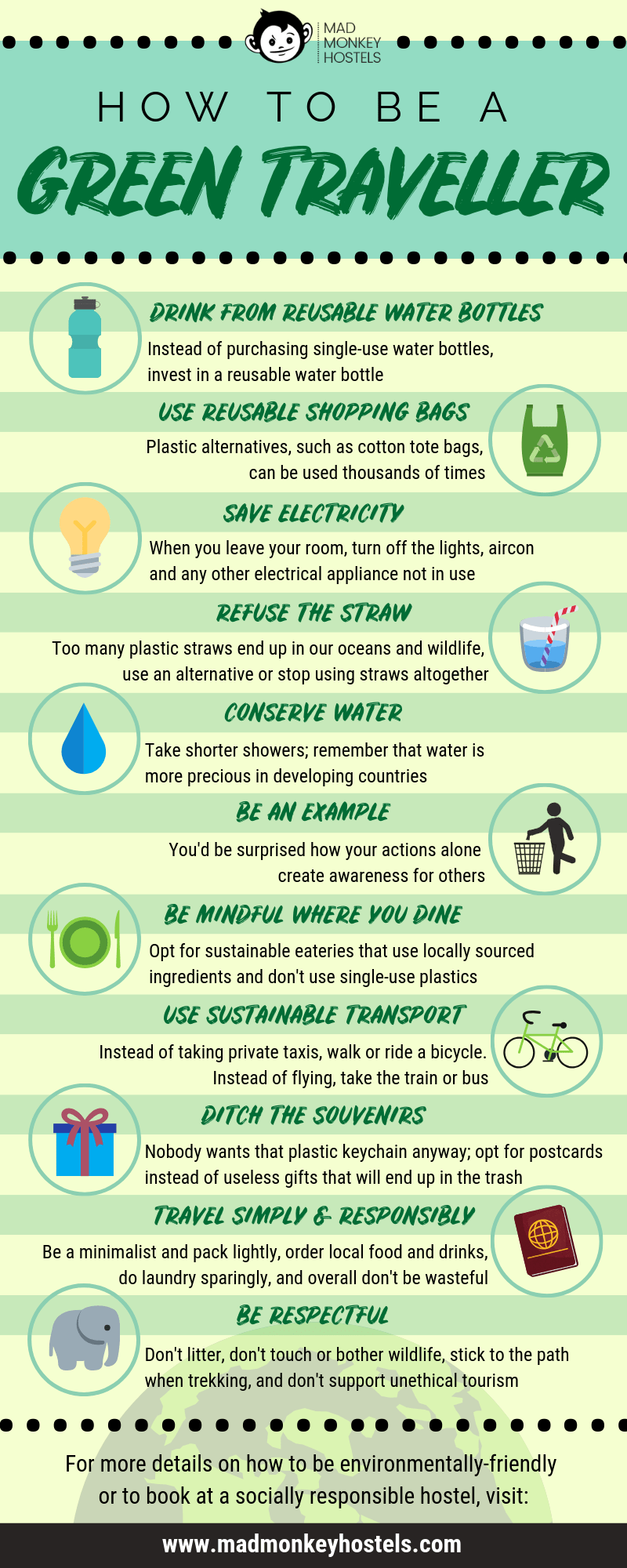
Here is a info-graphic picture made by Mad Monkey Hostels with simple tips for being a green traveler.
Conclusion: A Green Future for GCC Hospitality
Sustainable Hospitality in the GCC is no longer an optional add-on — it is the future of tourism in the region. By embracing energy efficiency, water conservation, waste reduction, and sustainable sourcing, GCC hotels can simultaneously reduce costs, enhance guest satisfaction, and meet government sustainability mandates.
The future lies in eco-luxury — delivering the same world-class hospitality the GCC is known for, but with a conscience. From solar-powered resorts in the desert to wellness retreats in the mountains, the GCC has the opportunity to set a global benchmark for sustainable tourism.
For hoteliers and investors, the message is clear:
- Invest early in sustainability to future-proof operations.
- Engage guests in authentic eco-friendly experiences.
- Partner with governments and NGOs to accelerate innovation.
By doing so, the GCC can ensure that its natural beauty, cultural heritage, and economic prosperity endure for generations, offering travelers a new kind of luxury: luxury with sustainability at its core.
Sources:
[1] GCC Hospitality Sector: Impressive Growth Supported by Strategic Investments
[2] COP28: How the GCC region pioneers sustainable hospitality
[3] GCC Hospitality: Luxurious, Sustainable, and Ready for Tomorrow
[4] Net-Zero Hospitality: Emerging Trends in Sustainable Tourism Architecture in the GCC
[5] GCC hospitality looks at more sustainable practices Share
[6] Sustainability in hospitality
[8] Ecotourism: UAE
[9] Sustainability and environmental impact: KSA’s Ministry of Tourism